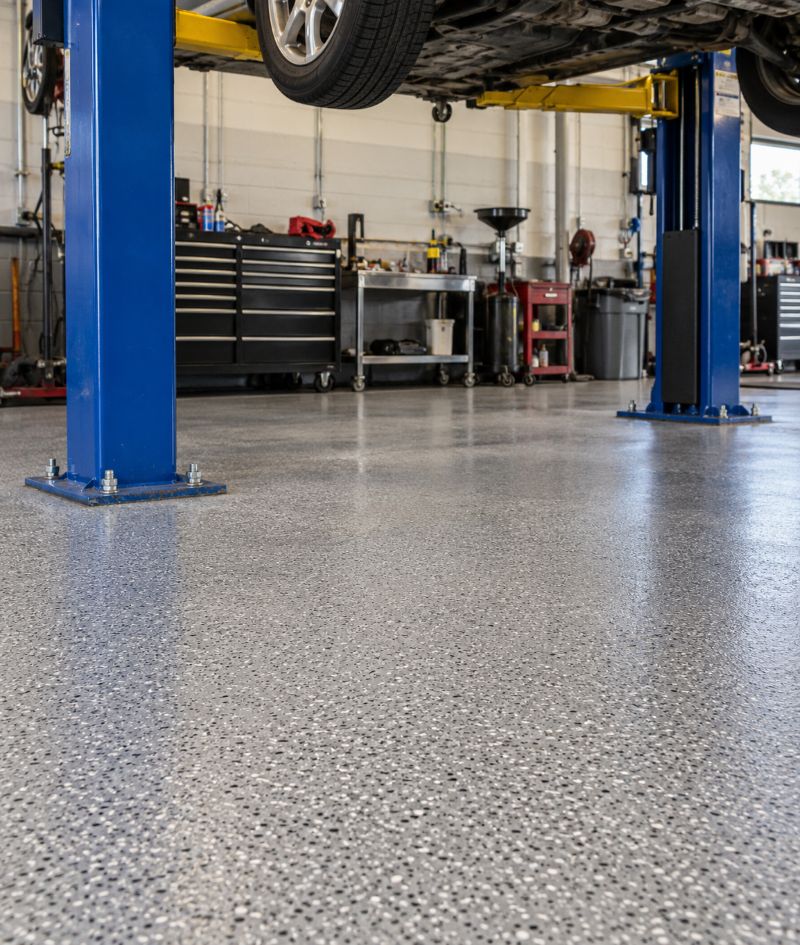
AUTO SHOP FLOOR COATING PITTSBURGH — WITHOUT CLOSING THE SHOP.

Oil-proof, lift-rated, hot-tire proof. We coat one or two bays at a time, overnight or over a weekend, so your lifts keep earning while the floor gets fixed.

Walkthrough, oil-saturation check, moisture reading and your price — same visit.

STAY OPEN
WHILE WE COAT
24 HRS
Back in service
$5–$9
Per sq ft
Simiron-certified crews
Lifetime warranty, in writing
1-day install
Free assessment · same-day price

WHAT A SHOP FLOOR TAKES THAT A HOME GARAGE NEVER WILL.

This is not a garage that sees a car twice a day. It is oil and ATF ground into the pores by tire traffic, coolant spills nobody caught, brake cleaner overspray, a dropped caliper, a floor jack dragged across the same line a hundred times a week, and steel casters under a tool box.

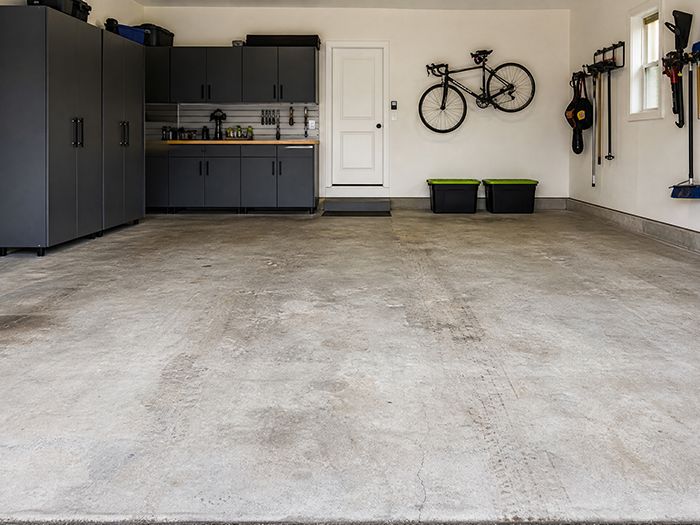
Then the second problem, the one that actually costs money: a bare or failing floor is slower to work on. Techs lose parts on a dark gray slab, oil-dry gets tracked into the customer lounge, and every spill becomes a mop-and-wait instead of a wipe.

HOME GARAGE · BARE SLAB
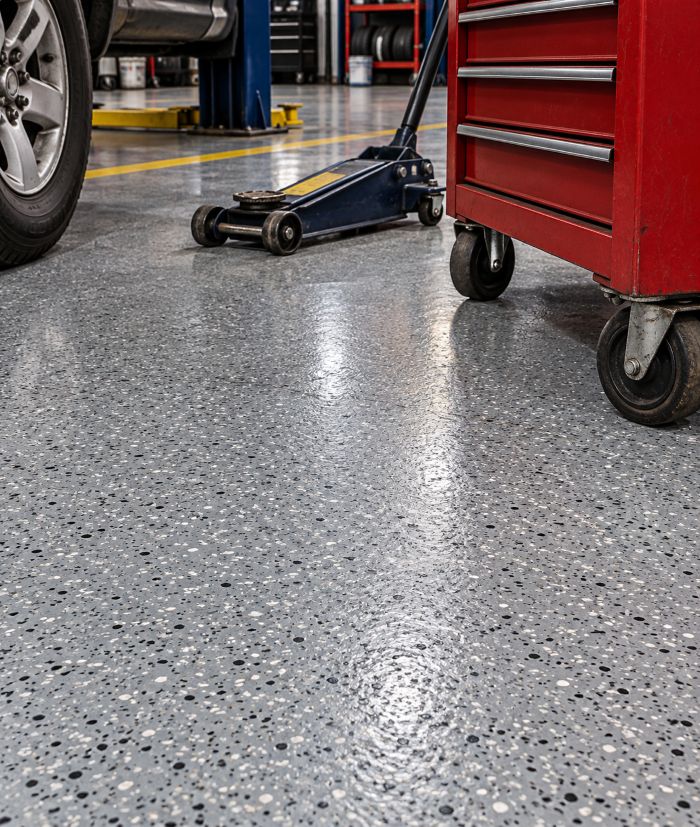
COMMERCIAL SHOP FLOOR

YOU DO NOT HAVE TO CLOSE THE SHOP.

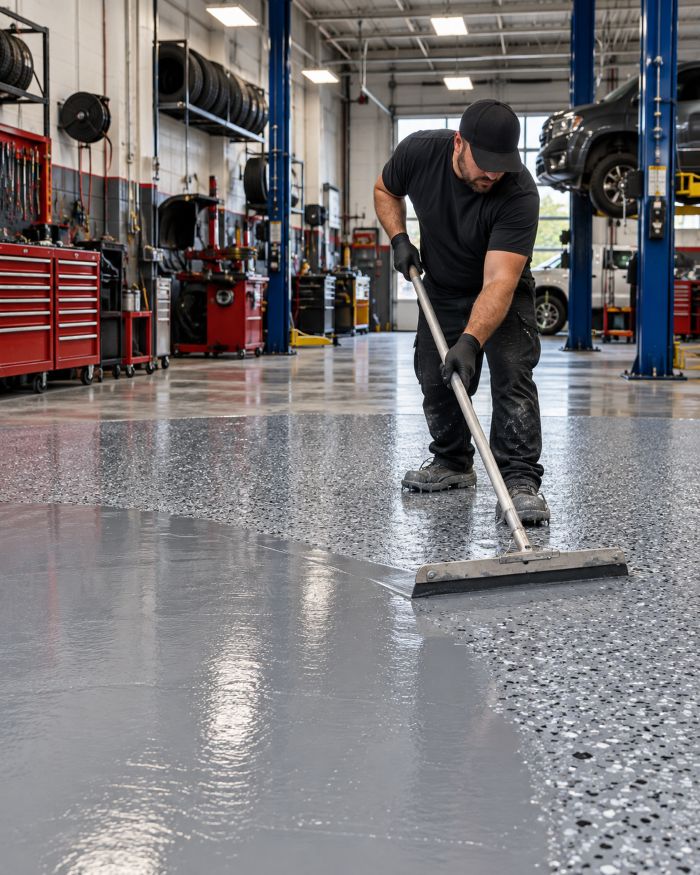
We schedule around your bays, not the other way round. One or two at a time, each handed back before the next opening.

Polyaspartic cures in about an hour per coat. A bay ground in the morning is topcoated that afternoon and taking a vehicle the next day.

Three options we will quote
Bay by bay

Zero lost revenue

One or two bays per visit. The shop never closes. Longest overall timeline, zero lost revenue.

Overnight

Back by morning

We start at close and hand the floor back for the morning. Best for small shops that cannot lose a bay at all.

Weekend

Fastest, usually cheapest

Whole floor at once, Friday close to Monday open. Fastest and usually the cheapest per square foot, because we mobilize once.

Epoxy cannot do this.

It needs 12–24 hours per coat and up to a week for full chemical cure. That is where the 5-day shutdown stories come from. If a contractor quotes epoxy for a working shop, ask how many days you are down. In writing.

THIRTY YEARS OF OIL IN THE SLAB — CAN IT STILL BE COATED?

Usually yes, and this is the part most quotes skip.

Concrete is porous. In a shop that has been running for decades, oil has not just stained the surface, it has wicked down into the slab. Grind that floor and the oil is still there, under the profile you just opened up. Coat over it and the bond fails in patches, generally within the first year, generally right where the lifts are.

So we check for it before we quote. What that involves:

If a section is too far gone — usually under a lift that has been leaking for years — we tell you that section needs cutting out and repouring, and we quote it separately or we walk. We will not coat over it and hope.

WHAT GETS SPILLED, AND WHAT HAPPENS TO IT.

What hits the floor
Bare or sealed concrete
Our Simiron system
Motor oil, ATF, gear oil
Soaks in, stains permanently
Sits on top, wipes up
Brake fluid
Softens sealers, etches
Resistant — rinse when you see it
Coolant and antifreeze
Stains, seeps into the pores
Non-porous, no penetration
Gasoline and diesel
Penetrates, odor stays
Resistant to short-term contact
Battery acid
Etches the slab
Resistant; clean promptly
Hot tires off the highway
Not applicable
No hot-tire pickup
Degreasers and hot water
Strip the sealer
Rated for shop cleaning chemicals

BUILT AROUND YOUR LIFTS, NOT DESPITE THEM.

Point loads are what actually kills shop floors, and they are the detail a residential crew gets wrong.

Two-post lift bases

We coat up to and around the base plates and detail the edge cleanly. We do not coat over anchor bolts, and we do not coat under a base plate that has to stay bolted down.

Four-post and alignment racks

Same approach, plus we mask the runway feet so nothing bonds where it will be moved later.

Jack stands, transmission jacks and engine hoists

Full-build polyaspartic takes the load, but point pressure under a stand foot is many times higher than under a tire. We recommend pads and we say so up front rather than after the first dent.

Adding a lift later

Tell us at the assessment and we will leave the anchor zone detailed so a future install does not chip the field.

TRACTION, LINES AND LIGHT.

Slip resistance where oil lands

We broadcast aggregate into the topcoat, and we can run a heavier grade in the bays and a lighter one in the customer-facing areas.

Bay numbers, walkways, equipment zones

Striping and stenciling go on before the topcoat, so the lines are sealed under the wear layer instead of painted on top of it where they scuff off.

Light

A light-colored floor measurably lifts foot-candles at bench height without touching the fixtures. Techs find dropped parts faster, and the shop photographs better, which matters more than it sounds when customers see the bays from the waiting room.

WHAT A SHOP FLOOR ACTUALLY COSTS.

Shop size
Approx. sq ft
Typical installed range
2-bay
1,000–1,400
$5,500 – $11,500
4-bay
2,000–2,800
$10,500 – $22,500
6-bay
3,000–4,200
$15,500 – $33,500
Dealership service department
6,000+
Quoted on site
What moves the number

Oil saturation depth, old coating removal, lift and drain detailing, striping, cove base.

And which schedule you pick. A weekend shutdown usually costs less per square foot, because we mobilize once instead of four times.

WHAT THE INSTALL ACTUALLY LOOKS LIKE.

01

Free shop assessment

Walkthrough with you, bay by bay. Oil-saturation testing, slab moisture reading, crack and damage inventory, lift and drain notes — and your options and pricing before we leave.

02

We agree the schedule

Bay by bay, overnight, or a weekend shutdown. You know which bays are down and when, in writing, before we start.

03

Contain and grind

Poly containment between the working bay and the live shop, HEPA-shrouded diamond grinding. Your techs keep working ten feet away.

04

Degrease, prime and repair

Oil-tolerant primer where the test called for it. Cracks, spalls and control joints filled.

05

Base coat, flake, striping, topcoat

Lines and bay numbers go down before the clear. Polyaspartic topcoat over everything.

06

Back in service

Foot traffic the same evening. Vehicles and lifts at 24 hours.

AUTO SHOP FLOOR COATING ACROSS THE PITTSBURGH METRO.

We travel about 50 miles from Pittsburgh. If your shop is outside that, call us anyway — for multi-bay commercial work we will usually make the trip.

AUTO SHOP FLOOR QUESTIONS.

Cost, downtime, old oil, lifts, hot tires and how long it lasts.

$5 to $9 per square foot installed. A typical 4-bay shop runs $10,500 to $22,500 depending on how much oil saturation has to be dealt with and whether an old coating has to come off. Minimum job size is $3,000.

No. We work bay by bay, overnight, or across a weekend, whichever fits your schedule. A bay we grind in the morning is topcoated the same afternoon and taking a vehicle the next day. You will know exactly which bays are down and when before we start.

Usually. We test how far the saturation goes before quoting, degrease, and use an oil-tolerant primer where the slab needs one. Where a section is genuinely too far gone, normally under a lift that has been leaking for years, we tell you it needs cutting out and repouring rather than coating over it and hoping.

Yes. We coat up to and around the base plates and detail the edges, and we never coat over anchor bolts or under a plate that stays bolted down. Tell us at the assessment if you plan to add a lift later and we will leave the anchor zone ready for it.

No. Hot-tire pickup happens with thin, poorly bonded coatings, typically low-grade epoxy over an acid etch. A properly ground, full-build polyaspartic system does not do it, and if it did, that is a warranty claim. This matters more in a shop than a home garage, because your tires come in hot off the highway all day.


No, and the distinction is worth knowing before you buy. Floor paint is a single-component coating, one to three mils thick, that sits on the surface. It is cheap and it will start lifting under tire traffic and solvents inside a year. What we install is a 20 to 40 mil multi-coat system mechanically bonded into a ground profile. Both get called “shop floor paint.” Only one survives a working bay.

Any hard floor is slick with oil on it, and any contractor who tells you otherwise is selling. What we do is broadcast aggregate into the topcoat for real wet traction, and we can run a heavier grade in the bays and a lighter one out front. It grips considerably better than sealed concrete and it is far easier to actually clean, which is the real answer to a slip problem.

Yes. Striping and stenciling go down before the clear coat, so the lines are sealed under the wear layer rather than painted on top where they scuff off in a season.

Ten to fifteen years under normal shop traffic, less in a heavy truck bay, and that assumes the prep was done right. The failure mode is almost never wear. It is a bond failure from skipped prep, which is why the oil testing above matters more than the product name.

GET YOUR SHOP FLOOR PRICED — WITHOUT CLOSING.

Walkthrough, oil-saturation check, moisture reading and your price — same visit.

Text with your floor guy

Drop your info and we'll start a text thread from our shop line — no call center, no waiting on hold.

Contact Form